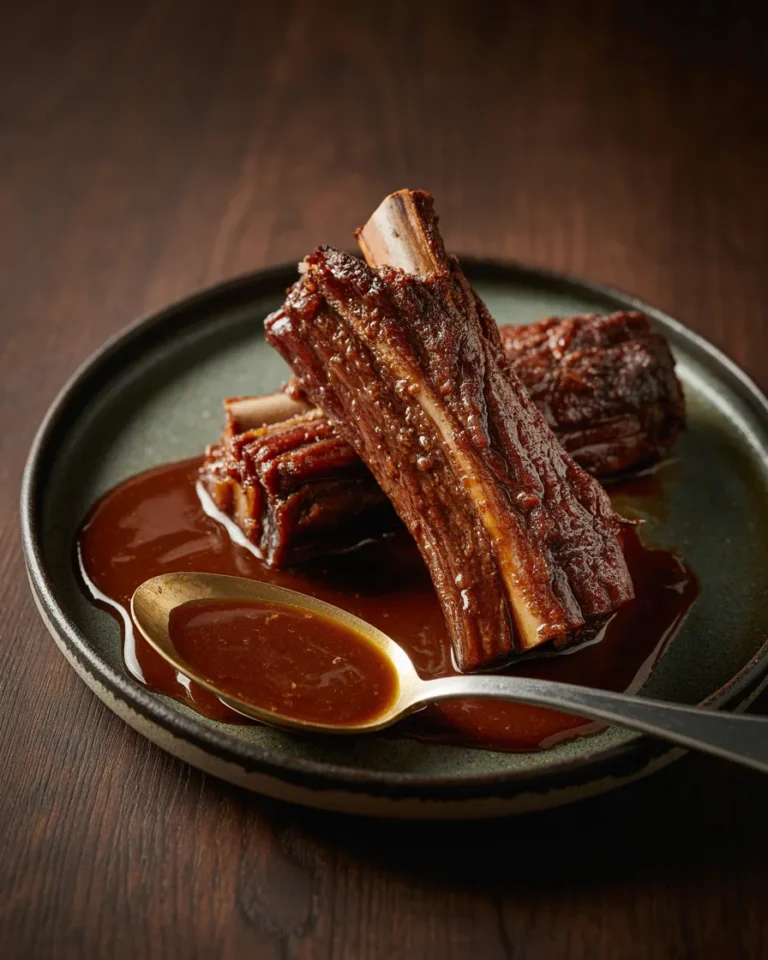
Slow-Smoked Brisket That Falls Off the Bone
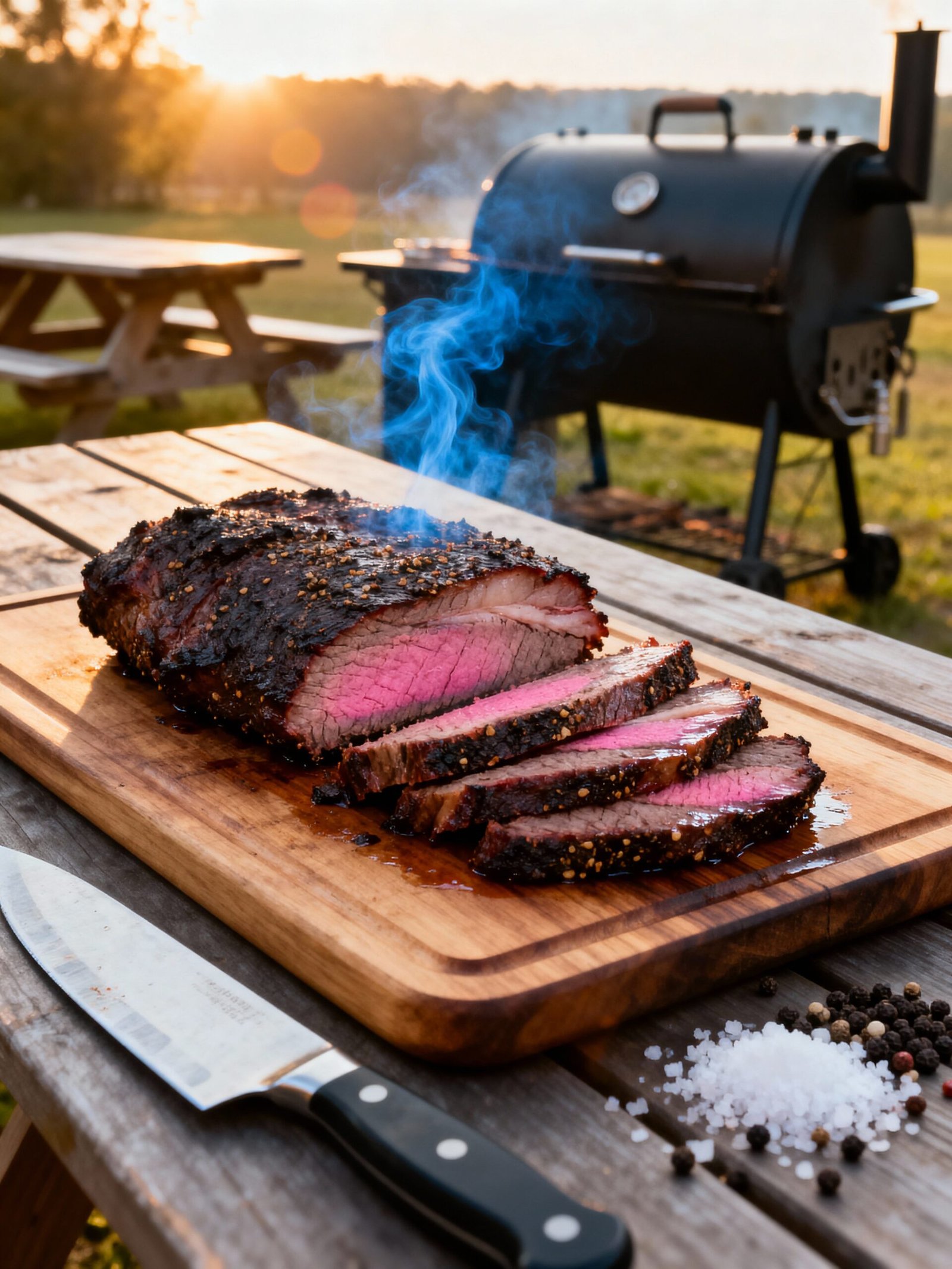
You want slow-smoked brisket that “falls off the bone,” wins the backyard, and doesn’t chew like a leather wallet? You came to the right pit. I chase tender, juicy slices with a bark that snaps, and I refuse to babysit a fire like a helicopter parent. I’ll show you the exact plan I use when I want that wobble-on-the-board moment and a line of friends “just checking in” around the smoker.
I learned this routine the messy way—through 2 a.m. spritzes, a few dry flats, and one truly heroic stall that tested my patience and my playlist. I’ll spare you the heartbreak and hand you the steps, temps, and tricks that deliver reliable, slow-smoked brisket greatness.
What “Falls Off the Bone” Really Means for Brisket
Let’s clear the smoke first: brisket doesn’t come with a bone. That phrase just nods to fork-tender meat that still slices clean. You want slices that bend like a hammock and almost melt when you breathe on them. You don’t want shredded pot roast on a cutting board.
So what delivers that feel? Low heat + steady smoke + patient resting. You nail those, and the knife glides like it owes you money. Ever wondered why some slices crumble even when you hit the “right” temp? I’ll explain that too.
Meet the Cut: Brisket Basics That Matter
Brisket comes from the chest, and it carries two muscles: the flat (leaner, longer) and the point (fattier, chunkier). A whole packer includes both, and it gives you the best shot at juicy results. I cook whole packers when I can, because the point forgives mistakes and the flat photographs like a champ.
Pick the right hunk and you win the cook before you light a match. Look for marbling in the flat, a flexible bend when you lift the cryovac, and a neat, fat cap without a thick, waxy slab.
- Choose a whole packer (12–16 lb) for your first big win.
- Favor Prime for extra marbling; Choice still delivers with good trimming and rest.
- Grab a brisket with a flat that feels springy, not stiff as a board.
- Avoid a huge, hard, fat deposit near the point; that chunk fights your trim and wastes space.
Gear and Fuel: Set Yourself Up to Win
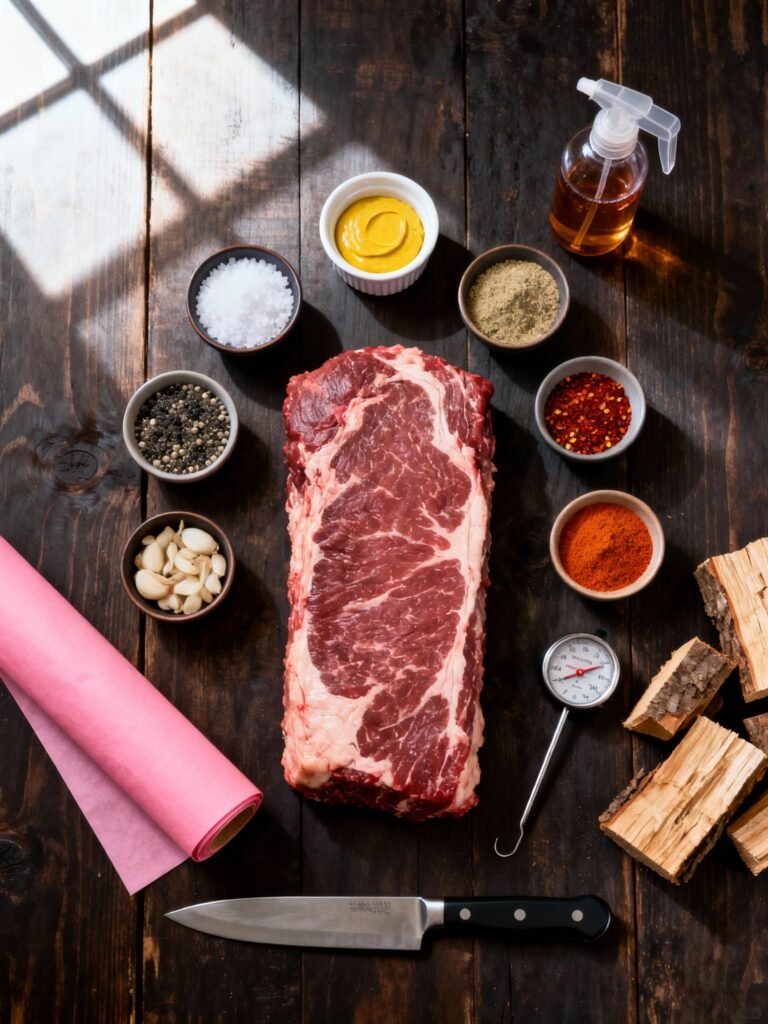
Use what you own and adjust the technique. You can run an offset, a pellet grill, a kettle with a charcoal snake, or a ceramic cooker. I switch pits often, and the method still holds if I control temperature and airflow. FYI: I trust a calibrated thermometer over the lid gauge every single time.
- Offsets: Run a clean fire with splits that burn blue and thin, not white and billowy.
- Pellet grills: Set 235–250°F, use strong pellets (oak, hickory), and add a smoke tube if you want more punch.
- Charcoal kettles: Build a snake or Minion pattern, place a water pan, and vent for 250°F.
- Ceramics: Stabilize your temp before you load the meat; ceramics hold heat like a bank vault.
For wood, I lean toward post oak for that Texas-style profile. Hickory hits harder. Mesquite brings attitude, so handle it lightly unless you like bold smoke. Fruit woods (apple, cherry, peach) add a gentle, sweet edge that flat-out works on brisket.
Trim and Season: Prep with Purpose
Trim with intention, and you set the table for tasty bark and balanced fat. I trim cold meat because the fat cuts more easily and cleanly. I target thin and even fat, so the heat renders i,t and the bark sticks like it means it.
- Trim the fat cap to about 1/4 inch and remove the hard, waxy deckle.
- Square thin edges so they don’t dry out.
- Round sharp corners to prevent burnt tips.
- Score the fat cap lightly to help render and hold the rub.
I season the day before when time allows, because salt needs time to work. I dry-brine with salt, then I apply the rub right before the cook, so the bark builds clean.
Rub blueprint (Texas-leaning, with a little swagger):
- 2 tbsp kosher salt
- 2 tbsp 16-mesh black pepper (go coarse; fine pepper muddies bark)
- 1 tbsp garlic powder
- 1 tbsp sweet paprika
- 1 tsp cayenne (optional heat)
- Binder: a thin swipe of mustard or hot sauce (you won’t taste it)
I keep the classic 50/50 salt and pepper as the backbone. You can add coffee or cumin for a twist, but I stick with simple for that deep beef flavor.
Fire Management and Smoker Setup
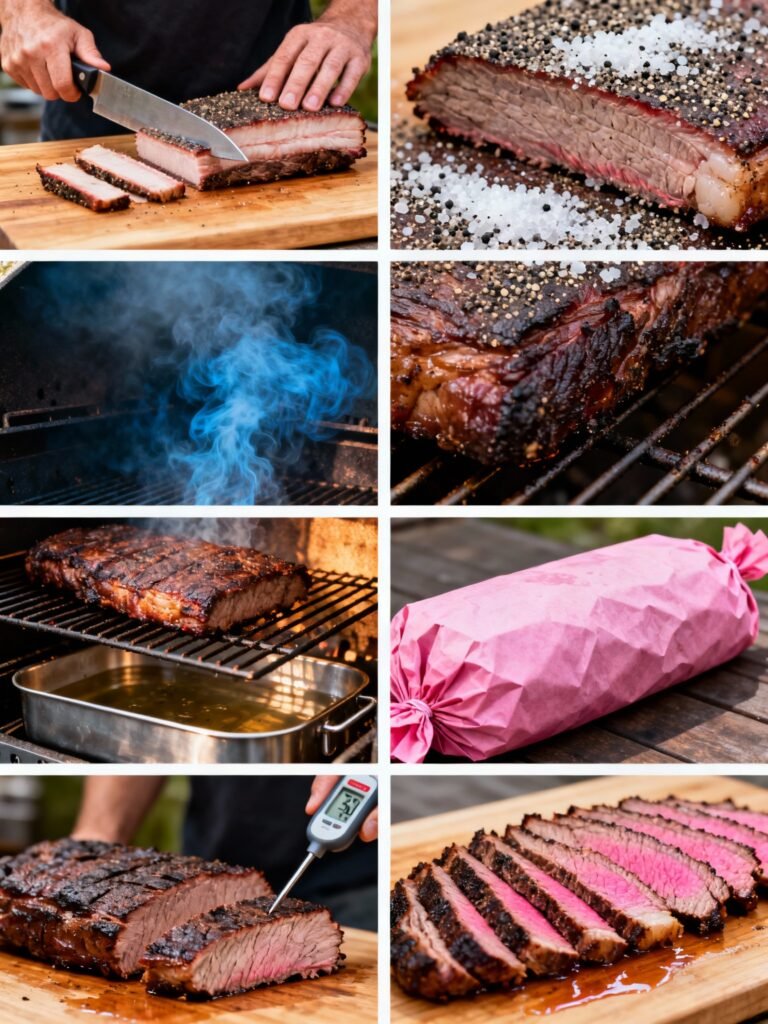
Control the fire and you control the cook. I preheat until my pit settles at 245–255°F. I watch for thin blue smoke, not dragon fog. I place a water pan near the heat source, and I keep the lid closed unless I have a reason to open it.
Offset Smoker Setup
Build a small, hot bed of coals. Feed the fire with splits that ignite fast and burn clean. Keep your exhaust wide open and control the temperature with the intake. I aim the thick point toward the firebox and run the fat cap down to shield the flat.
Pellet Grill Setup
Set 245–250°F and let the controller stabilize. Use a smoke tube if your model runs light on flavor. Place the brisket in the middle of the grate and rotate once mid-cook if your pit has a hot corner.
Kettle or Charcoal Smoker Setup
Lay a charcoal snake around the rim, add wood chunks on top, and light one end. Place a water pan under the brisket. Adjust the bottom vent until you hold 250°F and use the top vent for fine-tuning.
The Cook Timeline (Step-by-Step)
I love a game plan, so here’s the one I run for a 12–15 lb whole packer at 250°F.
- Preheat: Stabilize the pit at 245–255°F for 30–45 minutes.
- Load: Place the brisket with the fat toward the heat source. Keep the thicker point closer to the fire.
- Smoke Phase: Hold 250°F and build bark for 4–6 hours, until the surface looks firm and mahogany.
- Spritz: Start at the 2-hour mark and spritz every 45–60 minutes with a 50/50 mix of apple cider vinegar and water (or beef stock and water).
- Wrap: When the bark sets and the internal temp hits 165–175°F, wrap tight. Butcher paper guards the bark; foil speeds the finish.
- Finish: Cook until the thickest part of the flat probes like warm butter, usually at 200–205°F.
- Rest: Vent steam for 5 minutes, then rest wrapped for 1–3 hours in a dry cooler or a warm oven at 150–165°F.
Ever feel tempted to slice early because the house smells like a BBQ joint? Hold the line. The rest turns good brisket into great brisket.
Wrap Choices: Butcher Paper vs Foil vs Naked
I run butcher paper when I want a proud, crusty bark and steady moisture. Foil races toward done time and catches every drop of juice, but it softens the bark. Naked cooks deliver big bark and big risk, because the flat can dry if you blink.
- Butcher paper: Preserves bark, breathes a little, and keeps the meat juicy. IMO, it hits the sweet spot.
- Foil: Traps steam and speeds the finish. Use it when you need a shorter cook or you face nasty weather.
- Naked: Delivers monster bark if you manage humidity and airflow. Save it for confident days.
Spritzing and Moisture Management
I spritz to cool hot spots and help the smoke stick, not to drown the bark. I start after the color forms, and I keep a steady rhythm. I spray less often when the surface already shines, and I spray more often when the bark dries too fast.
Smart spritz options:
- 50/50 apple cider vinegar + water
- 50/50 beef stock + water
- Light beef tallow brush near the end for a glossy finish
You want that surface tacky, not soggy. Too much spritz turns bark into paste and tears your heart out when it peels.
The Stall Explained (And How to Beat It)
The stall isn’t a myth; it’s physics and patience arm-wrestling on your grate. Surface moisture evaporates and cools the meat, so the internal temperature flatlines. You watch your probe sit at 165°F for hours, and your willpower wobbles.
Two smart plays:
- Wrap at 165–175°F and push through.
- Ride it out at 250–265°F and keep your spritz honest.
I wrap when I want a tidy timeline. I ride it out when I chase a louder bark, and I don’t care how long it takes.
The Finish: Temps, Feel, and Probing for Doneness
I trust feel first and temp second. I slide a thin probe into the flat and the point, and I want it to glide with no grab. The number usually lands at 200–205°F, but the glide decides the pull. Ever wondered why 203°F sometimes feels tight? Your bark dried a little early, or the flat ran lean.
When the probe says yes, I lift the brisket, vent steam for a few breaths, and then I wrap it back up for the rest. I don’t rush the table. The rest saves juices that still travel inside the meat.
Rest Like You Mean It
The rest matters as much as the smoke. I hold finished brisket in a warm oven at 150–165°F or in a cooler with towels for 1–3 hours. I don’t slice until the internal temp drifts down to the 150s.
Rest method:
- Vent for 5 minutes to stop cooking.
- Wrap tightly (paper or foil), add a towel layer, and place in a dry cooler.
- Hold 1–3 hours, or longer if your schedule demands it; just keep temps above food-safe range.
Slice for Maximum Juiciness
I separate the point and flat before slicing so I can cut each muscle across its own grain. I trim any thick, rendered fat that looks waxy, and I keep slices tidy and even. I start on the flat and finish with thicker point slices or burnt ends.
Slicing cues:
- Slice the flat across the grain, about 1/4 inch thick.
- Rotate the point 90 degrees and slice thicker, around 3/8 inch.
- Keep the knife long and sharp; let the meat do the work.
Sauce and Finishing Touches (Optional)
Texas-style brisket needs no sauce, but I keep a small pot of warm, thin sauce on the side. I also brush the cut face with a teaspoon of hot beef tallow when I hold the platter under a heat lamp. That touch keeps the slices glossy and moist.
Finishing options:
- Light sprinkle of flaky salt right before serving
- Warm au jus from your foil wrap or a quick beef stock reduction
- A peppery, thin sauce for the folks who ask
Troubleshooting: Quick Fixes for Common Brisket Pains
Stuff happens. You can still plate a win.
- Dry flat: Slice thinner, brush with warm tallow or au jus, and tuck slices under foil for 10 minutes.
- Tight texture at 203°F: Wrap back up and hold at 150–165°F for 30–60 minutes; collagen still needs time.
- Crumbly slices: You overshot the finish or cut with the grain. Swap to thicker slices and serve more points.
- Pale bark: Run 10–15°F hotter next time, skip early spritz, and avoid wet wood that smokes like a tire fire.
- Bitter smoke: Clean your firebox, burn splits to clean blue, and open the exhaust fully.
- Too salty: Serve with unsalted sides, add a sweet slaw, and hold the finishing salt.
- Flat burning on an offset: Face the fat cap toward the firebox or add a small heat shield.
Serving and Sides: Backyard BBQ Win
You earned this. Serve slices on a board with pickles, onions, and white bread, or go full spread with beans, slaw, and cornbread. I add a bright, crunchy salad to cut the richness and keep plates balanced. Cold beer, sweet tea, or a big red wine all play nicely with the smoke.
Want to spin a second course? Dice the point, toss it with a little sauce, and return it to the pit for burnt ends. People remember burnt ends. People text you for weeks about burnt ends.
A Realistic Saturday Timeline (Example)
I plan backwards from my dinner time and protect the rest window.
- 6:30 a.m. – Light the pit and stabilize at 250°F.
- 7:15 a.m. – Load brisket, fat toward the heat source.
- 9:15 a.m. – Start spritzing.
- 12:00–1:00 p.m. – Wrap at 165–175°F when the bark sets.
- 2:30–4:00 p.m. – Probe tender around 200–205°F; pull when it glides.
- 4:00–5:30 p.m. – Rest in a cooler or warm oven.
- 5:30 p.m. – Slice, smile, serve.
I pad an extra hour for stalls and curveballs. A confident rest beats a rushed slice every single time.
FAQs, Fast and Honest
- Can I cook slow-smoked brisket on a gas grill? Yes. Set one side to low, place a smoke box or foil pouch over the flame, and park the brisket on the cool side with a water pan. Hold 250°F and rotate for even heat.
- Fat cap up or down? Face fat toward the heat source. I run fat down on an offset and fat up on a kettle that heats from below.
- What temp gives that “falls off the bone” wow? Trust the probe feel, not just the number. You’ll land around 200–205°F, but you want that effortless glide and a relaxed jiggle.
- Do I need sauce? No, but a thin, peppery sauce or a little au jus never hurts picky guests.
Final Word: Your Backyard BBQ Win
Slow-smoked brisket rewards patience and punishes shortcuts. You trim smart, run 250°F clean smoke, wrap when the bark tells you, and rest like it matters. You slice across the grain and ride that perfect bend.
I chase that moment when the knife slides and the board wobbles, and I still grin when it happens. You’ve got the map, the temps, and the moves. Fire up the pit, invite the neighbors, and claim your Backyard BBQ Win—I’ll raise a plate with you when those slices hit the board.
Slow‑Smoked Brisket (12–16 lb Packer) — Tender Slices, Crusty Bark
Ingredients
Equipment
Method
- Trim: Chill the brisket; trim fat cap to ~1/4 in (6 mm); remove hard, waxy fat and ragged edges; round corners; lightly score the fat cap.
- Dry brine: Salt all sides at 1.25–1.5% of trimmed weight; set on a rack, uncovered in the fridge for 12–24 hours.
- Preheat smoker: Stabilize at 245–255°F (118–124°C); add a water pan; aim for thin blue smoke.
- Season & load: Light binder; apply rub evenly; place brisket with fat toward the heat source (offset: fat down, point toward firebox; kettle/ceramic: fat down).
- Smoke phase: Cook at 250°F/121°C; once color sets (about 2.5–3 hours), spritz every 45–60 minutes to keep the surface tacky, not wet.
- Wrap when bark sets: At 165–175°F (74–79°C) internal AND when the bark doesn’t rub off, wrap tightly (butcher paper = crisper bark; foil = faster finish).
- Finish to probe‑tender: Continue at 250°F/121°C until the thickest part of the flat probes like warm butter (usually 200–205°F / 93–96°C). Feel beats numbers.
- Rest: Vent 5 minutes; rewrap; rest 1–3 hours in a dry cooler with towels or a 150–165°F (65–74°C) oven until internal drifts into the 150s°F (~65°C).
- Slice & serve: Separate point from flat; slice flat across the grain ~1/4 in (6 mm); slice point ~3/8 in (10 mm); brush slices with warm tallow or au jus if desired.
Notes
Salt‑by‑weight: 1.25–1.5% kosher salt of trimmed meat weight (e.g., 80–95 g for a 14 lb brisket).
Wood: Post oak (balanced); hickory (stronger); mesquite (bold, sparingly); apple/cherry/peach (mild).
Spritz: 50/50 apple cider vinegar + water, or 50/50 beef stock + water.
Wrap: Paper = crisper bark; foil = faster finish (softer bark).
Troubleshooting: Dry flat—slice thinner and brush with warm tallow/au jus. Tight at 203°F—wrap and hold at 150–165°F for 30–60 min. Pale bark—run 10–15°F hotter next time and spritz later.
Storage: Fridge 3–4 days; freeze up to 3 months (slice first). Reheat sealed in 275°F/135°C oven 20–30 min or in a 150–165°F/65–74°C water bath.
Safety: USDA beef roasts minimum 145°F/63°C + 3‑min rest; brisket is typically cooked to 200–205°F (93–96°C) for tenderness.